
Retail Media's $200B Growth Tests Creative Effectiveness and Brand Equity
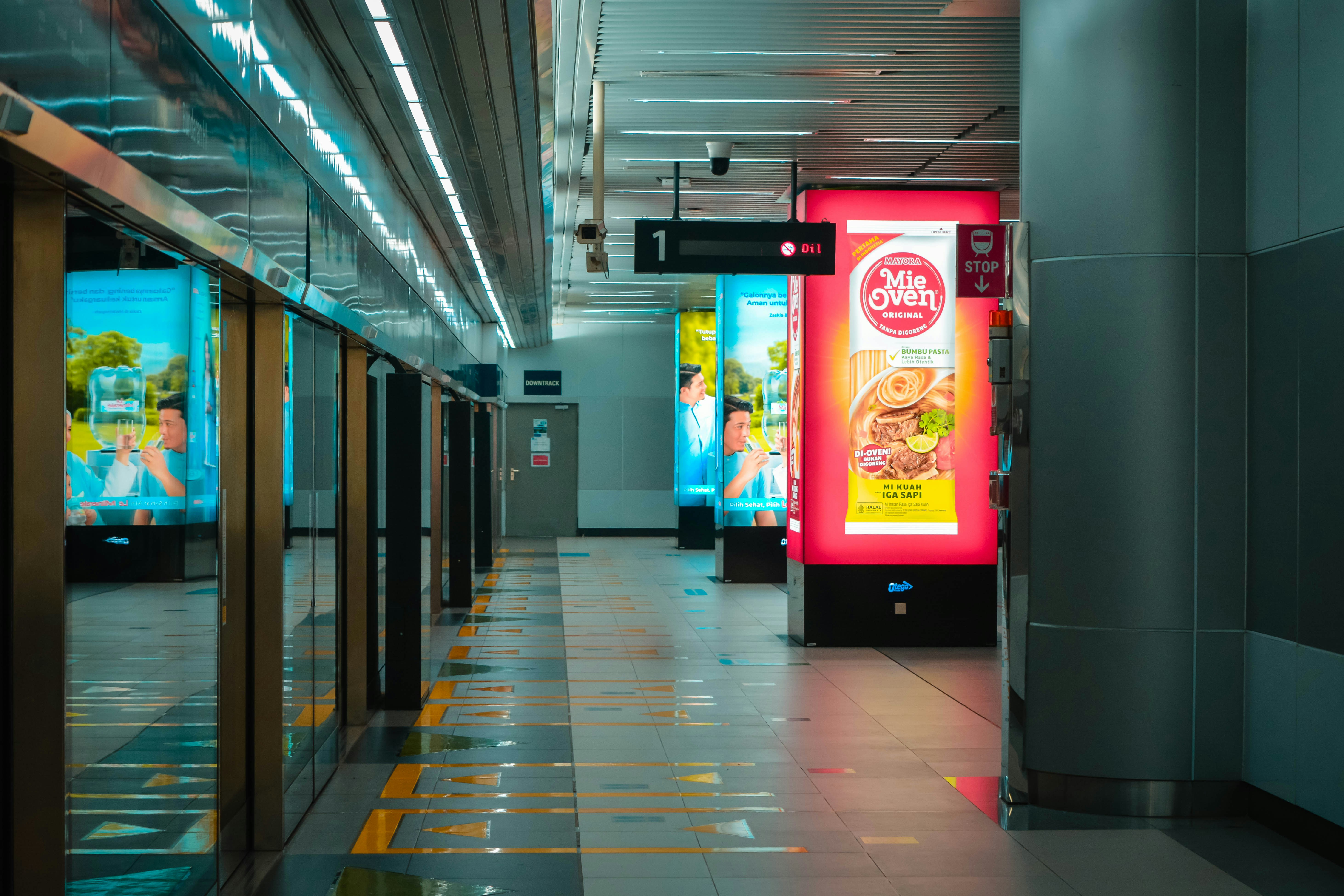
As retail media investment tops $200bn, creative effectiveness becomes the decisive battle — debated at ARF's October conference and visible in CRI's Albertsons expansion.
Why is creative effectiveness the new battleground for retail media?
Creative strategy is being reshaped by the convergence of retail media, hyper-targeting, and AI, and the industry will gather on October 14 at Tribeca Rooftop in New York for the ARF Creative Effectiveness Conference, held during Out of Home New York week, to debate how to navigate the shift. The stakes are quantified in fresh Ipsos research: memory encoding drops 47% for ads running on retailer platforms versus generic offsite environments, while superior creative drives a 12% lift in short-term brand choice among undecided shoppers and a 21% advantage among consumers who are not actively in the market. That data sharpens a central tension — granular targeting and real-time optimization improve short-term efficiency, yet long-term brand equity becomes harder to sustain. With the ARF promising forward-looking discussions, real-world case studies and its annual CMO Award, the conference frames creative effectiveness not as a soft discipline but as the core competitive variable in a precision-driven media economy.
Is retail media's explosive growth starting to slow?
Retail media has become a media heavyweight, but its trajectory is clearly maturing. According to WARC Media, worldwide investment is on course to reach $200.4bn in 2026, growing 11.5% to $223.4bn in 2027, when it will account for 15.2% of all global ad spend. Momentum is cooling toward single digits: excluding Amazon, the market is set to dip to 9.8% growth in 2027 — the weakest year-on-year rate since WARC began tracking the sector. The US is outpacing Europe, with retail media network spending forecast to grow 13.6% in 2028 to $74.9bn. Concentration remains a challenge, as Amazon captured 78% of US retail media spend in 2025 and Walmart 7.5%, per Walrus Intelligence. WARC's Alex Brownsell warns that retailers face a delicate balancing act between growing ad revenue and protecting the shopper experience, noting that retail media excels at converting existing demand but underperforms on long-term brand building.
How can brands balance performance goals with brand equity?
The performance-versus-brand debate dominates this year's conference agenda, mirroring an industry-wide reckoning. Ipsos will present the "Retail Media Performance Trap," drawing on a controlled experiment involving more than 21,000 shopping experiences to argue that closed-loop attribution optimizes for "decided shoppers" who were already likely to convert. Google's Nick Pandolfi will make the "Brandformance" case, using APIs, AI and attribution to mathematically prove that brand investment grows performance. LinkedIn's B2B Institute and Ipsos will share creator-led research and a "Creator DNA" framework for balancing authenticity, brand presence and performance, while Ogilvy's Hannah Lewman will argue for escaping the "creative wind tunnel" of data-optimized sameness. A finance panel, "Buying Into the Brand," will pressure-test whether CFOs are genuinely convinced by the day's evidence. The stakes are measurable: WARC finds retail media converts existing demand well but generates poor long-term outcomes, and 73.9% of UK brands still spend with three or fewer retail media networks.
What does CRI's Albertsons takeover signal for the market?
The shifting competitive landscape is visible in real time. After Stratacache's financial challenges, US digital signage vendors have been competing for its customers, and Kentucky-based Creative Realities (CRI) has won grocery giant Albertsons. CRI confirmed it is serving roughly one million ads daily across 3,000 in-store retail media screens and plans to migrate 1,000 Albertsons locations to its CMS by the end of September using remote migration scripts that avoid costly hardware replacements. It is also executing an $8.5m digital signage and IPTV deployment for the Tennessee Titans, rolling out across 285 AMC Theatres with National CineMedia, and finalizing contracts with a 900-location wireless retailer and a 1,000-unit quick-service restaurant chain. The expansion carries a cautionary tale from tech author Cory Doctorow: with Amazon, The Home Depot, Macy's and Walmart each averaging 20+ ads per page, retail media risks "enshittification" — a degraded shopper experience that undermines campaign effectiveness and, ultimately, the creative ROI the entire industry now depends on.